Etsy Sellers Are Being Tricked by Fake Buyers
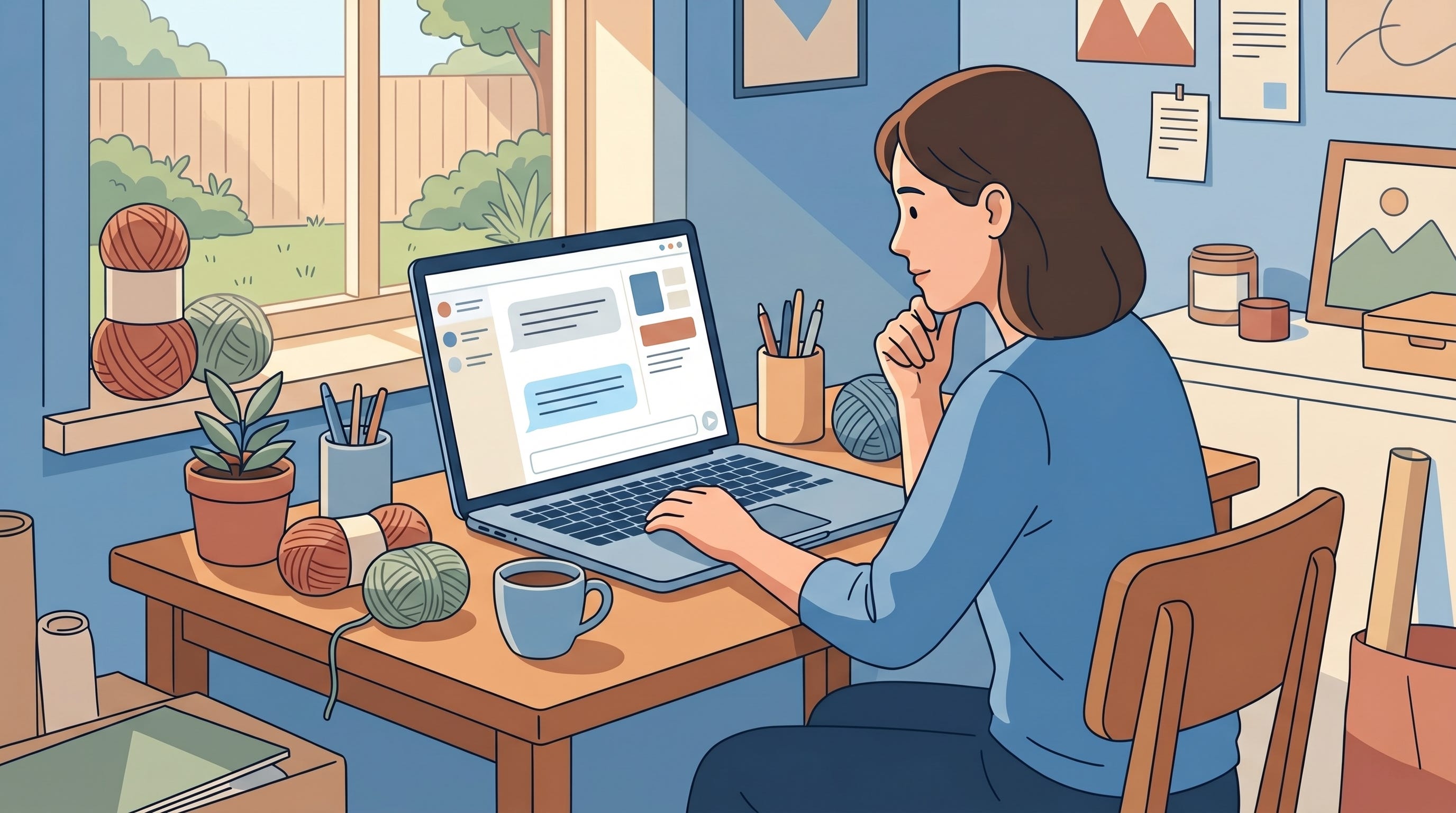
If you sell on Etsy, there’s a scam you need to know about. A “buyer” messages you claiming they had trouble with a purchase, then follows up with a link. Click it, and you end up on what looks like an Etsy support chat that asks you to “re-verify” your payment card. The chat is fake. The goal is your credit card number.
Anyone who sells on Etsy, especially small-shop owners who do this on the side
New sellers who haven’t seen every scam yet
Sellers whose income depends on the shop, which makes them more likely to act fast if something sounds like it might cost them sales
People who run a small business from home and do their own customer service
If Etsy is a regular part of your week, this is aimed at you.
The message. A “buyer” sends you an Etsy message with odd formatting. Often they use your username instead of your display name. They claim they had trouble placing an order for one of your products.
The link. In a follow-up message, they send a link that looks like Etsy. Something like
www.etsy.com2%[email protected]/CsRUAf9NS9. At a glance, it reads “etsy.com”. The extra characters and symbols mean it actually goes somewhere else entirely.The fake support chat. Clicking the link pops up a page that looks like an Etsy “Support Chat” window. It says Etsy’s payment system has changed and all sellers need to re-verify their cards.
The urgency. The chat claims your payouts are on hold until you verify. This pushes you to enter your card number before thinking.
The theft. Everything you type goes straight to the scammer. Name, card number, expiry, security code, and often your Etsy login too.
A buyer who messages you before purchasing instead of just buying
A URL that contains unusual characters, extra numbers,
%signs, or random strings. Real Etsy links are clean.A “support chat” that pops up after clicking a link in a message. Real Etsy support lives inside your account at etsy.com, not a popup from someone else’s message.
A message pushing urgency: “your payouts are on hold”, “verify before midnight”
Requests for full payment card details. Etsy already has your payment info. They don’t need you to “re-verify” it through a chat window.
A message that refers to your username instead of your actual name, especially if you set a display name
Never click links in Etsy messages from unknown buyers. If a buyer has a genuine problem, they can leave a review or open a real support case inside their own Etsy account.
If you need to check something on Etsy, open a new browser tab and go to etsy.com yourself. Log in there. Your real orders, messages, and notifications will show up. The fake support chat won’t.
Check Etsy’s actual procedures. Etsy will never ask for your full payment card details through a chat or a direct message. Payment info is managed in your Shop Manager under Payment Settings.
Turn on two-step verification on your Etsy account. Etsy → Account → Security. This stops most account takeovers even if a scammer gets your password. For a broader walkthrough, see our free course Simple Strategies to Be Secure Online.
Report the message. Forward the suspicious message to Etsy’s trust and safety team through their help centre. Also report to the Canadian Anti-Fraud Centre at 1-888-495-8501. If you’re in the US, the FBI’s IC3.
If you already entered your card. Call your bank or credit card company right away and cancel the card. Change your Etsy password from a different device. Check haveibeenpwned.com for your email.
Warn other sellers. Small-shop Etsy communities on Reddit and Facebook groups often have threads about active scams. Posting what happened to you helps other sellers spot it.
The short rule for any platform scam: never click a link from a stranger who “has a problem”, and never enter payment details in a support chat popup. Open the real site yourself, log in, and handle anything through the official channels. Five extra seconds makes this entire scam fall apart.
For a full walkthrough of how to spot phishing across email, texts, and web pages, see How Not to Get Phished.
If you’re seeing a new variation of this scam, I’d love to hear about it. Reply to the Phended Security Blog and we can warn other sellers.
Never miss an alert
New posts like this one, free every week. No spam, unsubscribe any time.