The Bank Fraud Call Nobody Warned You About
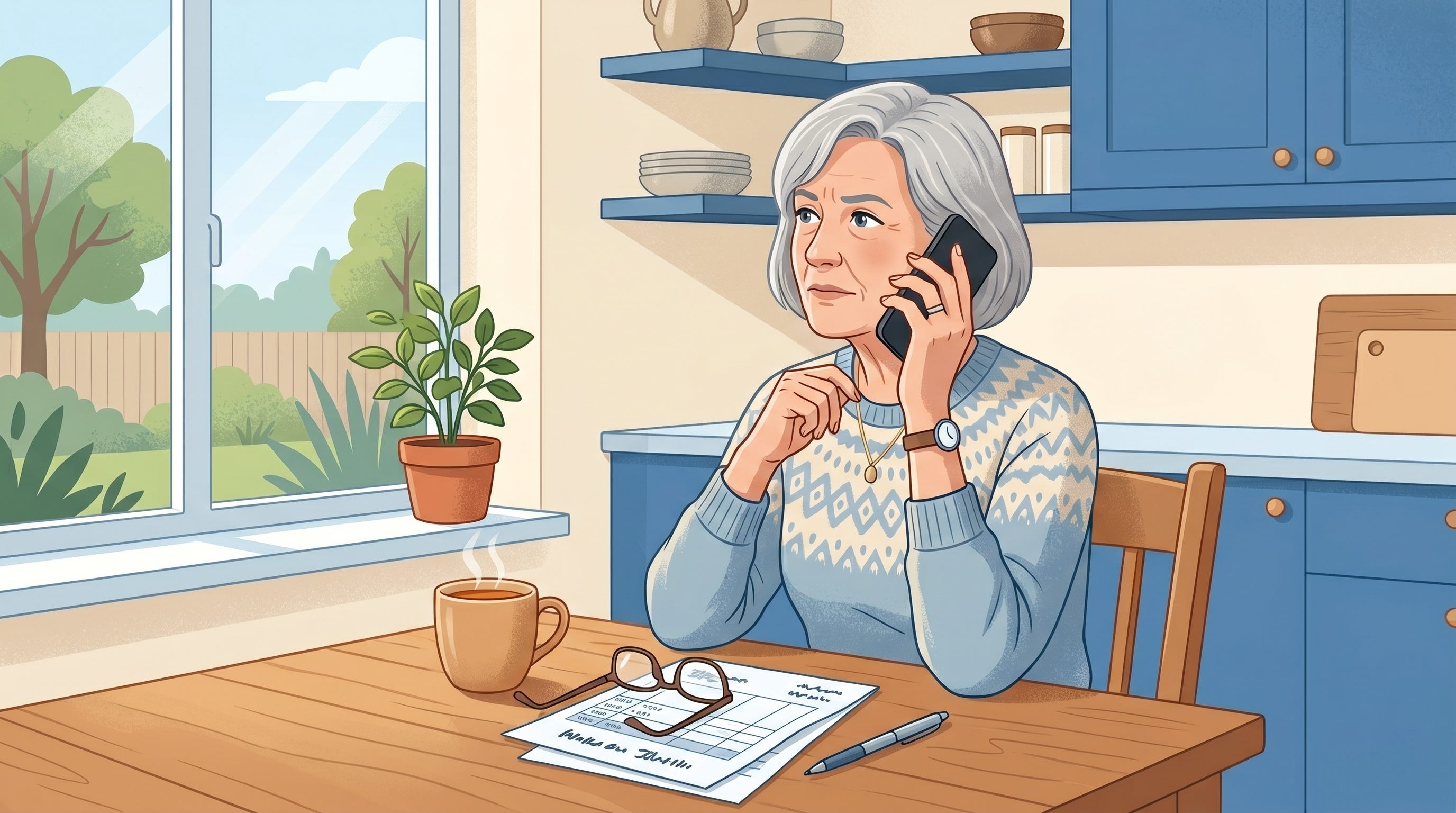
A scam call going around right now is catching even careful people. Someone claiming to be from RBC, TD, Scotia, BMO, or another big Canadian bank calls to warn you about a suspicious charge. The caller ID shows your bank’s real name. The voice is calm and professional. Everything they tell you is a lie designed to get you to send them money.
Anyone with a bank account, especially customers of RBC, TD, Scotia, BMO, or CIBC
Older adults who grew up trusting phone calls as legitimate
Small business owners whose accounts see a lot of activity and might genuinely have unusual charges
Anyone who recently had a legitimate fraud alert, because they’re primed to expect this kind of call
People who’ve had their number exposed in a data breach, which is now billions of people
If you bank in Canada, assume this call is coming for you eventually. Better to know the pattern than be surprised.
The caller ID. The call shows up as your bank’s name, often with a 1-800 number that matches the real bank. This is easy to fake using a technique called caller ID spoofing. Trust nothing from caller ID alone.
The opener. “This is the RBC anti-fraud department. We’ve detected a suspicious charge of $1,247 at a gas station in Quebec. Can you confirm this was you?”
The panic. You say no, you didn’t make that charge. They sound helpful and reassuring. They say they’ll help you cancel it.
The “verification”. They ask you to confirm your identity. They ask for your full card number, the three digits on the back, your online banking password, or the one-time code your bank just texted you. Every single one of those is a red flag. Real banks already know your card number. They don’t need you to read it back.
The real theft. The moment you give them a one-time code from your bank’s text message, they use it in real time to either transfer money out of your account or log into your online banking. If you gave them a password too, they can keep doing it for weeks.
The “safe account”. Sometimes they escalate by saying your whole account is compromised and you need to move your money to a “safe holding account” they control. By the time you realize, the money is gone.
Any incoming call claiming to be from your bank’s fraud or security department, even if the caller ID matches
Any request for your full card number, PIN, online banking password, or a one-time code
Anyone asking you to move money to a “safe account” or a “holding account”
Anyone pressuring you to stay on the line
Anyone who says “don’t hang up and call us back, this line is secure”
Anyone asking you to download an app or let them remote into your computer
A call that arrives right after you actually had a real fraud alert from your bank, which may mean someone is watching your email
Hang up. Always. It doesn’t matter who they say they are. If there’s really a problem, you can call the bank back in 30 seconds.
Call the bank using the number on the back of your physical card, or on your statement. Never call a number the caller gave you. That number probably just loops back to the scammer.
Your bank will never ask you for your full password, your one-time code, or your PIN over the phone. Ever. If they’re asking, they’re not your bank.
Tell your bank to put a note on your account. Ask them to flag it so any large withdrawals require an in-branch visit. Most Canadian banks will do this if you ask.
Use two-step verification that doesn’t rely on SMS where possible. Text codes can be stolen through SIM swap attacks or redirected when the caller has you distracted. If your bank app supports biometric or authenticator-based confirmation, use that instead.
If you gave them anything. Call your bank immediately from a different phone if possible. Lock the account, cancel the card, reset online banking credentials. The sooner you call, the more likely the bank can recover the money.
Report the call. In Canada, call the Canadian Anti-Fraud Centre at 1-888-495-8501. In the US, the FBI’s IC3. Your report helps authorities track and shut down the call centres running these scams.
The most important habit here is the simplest one. Hang up. Not because you’re being rude, but because every second you stay on the line is a second where a trained scammer is working on you. When in doubt, hang up, wait two minutes, and call your bank using the number you know is real.
Keep the number on the back of your card somewhere visible. That tiny piece of prep makes it easy to do the right thing when your heart is racing.
For a broader primer, our free course How Not to Get Phished covers voice scams alongside emails and texts. Also see our related post on How to Spot a Fake Email From Your Bank, since attackers often combine the call with a follow-up email.
If your parent or grandparent banks online, this scam is one of the top three that hits them. Save this post, forward it, or ask Daveto help them talk through what a real bank call sounds like.
Never miss an alert
New posts like this one, free every week. No spam, unsubscribe any time.